Email: sales@hebeiseawell.com
Tel: +86 13803395277


When selecting lighting elements for high-end interior design or large-scale event planning, the distinction between a functional candle and a decorative piece often lies in the artistry of the wax and the precision of the burn. In the global market, the demand for specialized wax products has shifted from simple illumination to atmospheric storytelling, where patterns and materials convey cultural narratives.
The procurement of high-quality wax products often leads buyers to investigate the manufacturing hubs of Asia, where a blend of traditional craftsmanship and modern industrial scale creates a unique competitive advantage. Understanding the technical nuances of wax composition—from paraffin to beeswax—is essential for ensuring that a product not only looks visually appealing but also performs consistently across different climatic conditions.
For those sourcing China Candles, the focus is increasingly on the intersection of heritage-inspired design and international safety certifications. This analysis explores the structural and aesthetic considerations that define modern candle manufacturing and how these factors influence the final ambiance of a space.


The transition of candles from basic utility to high-art decorative items reflects a broader shift in global consumer psychology. Historically, the focus was on the duration of the burn and the stability of the flame. However, contemporary markets now prioritize the "visual experience" before the candle is even lit, treating them as architectural elements of a room.
This evolution is particularly evident in the production of shaped and tapered candles, where the mold's precision determines the product's perceived value. By integrating advanced molding techniques with traditional aesthetics, manufacturers can now produce complex geometries and intricate surface prints that were previously impossible at scale.
The performance of a candle is fundamentally dictated by its wax chemistry. Paraffin remains a staple for its excellent scent throw and affordability, particularly in pillar and tealight formats. However, the rise of natural waxes, such as beeswax, has introduced a new standard for clean-burning, non-toxic lighting. Beeswax, in particular, is prized for its natural honey scent and higher melting point, which results in a slower, more stable burn.
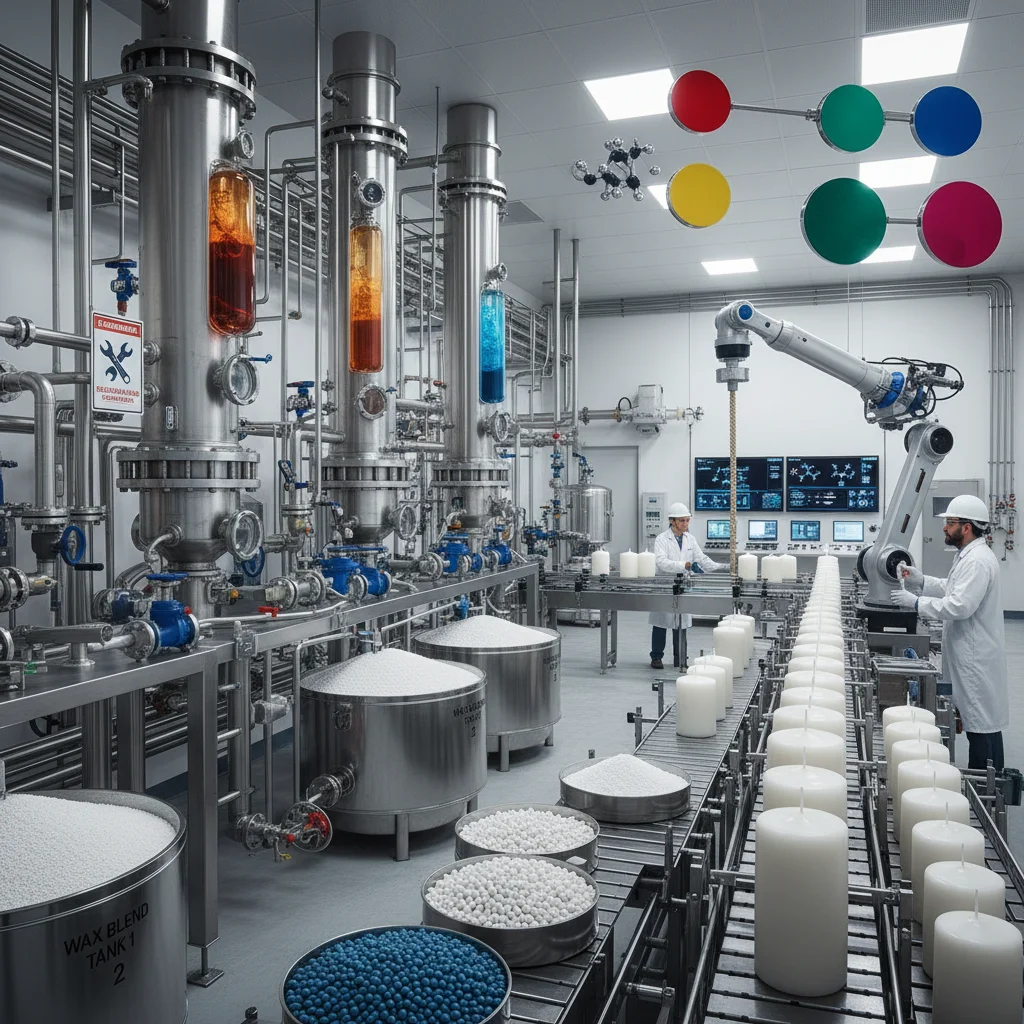
Beyond the base wax, the interaction between the wick material and the wax pool is critical. A wick that is too large causes "tunneling" or excessive soot, while one too small leads to a flickering flame that cannot sustain itself. Professional manufacturers balance these variables to ensure that whether it is a tapered candle or a container candle, the burn is steady and clean.
Furthermore, the introduction of specialized container materials—such as ceramic, glass, and tin—changes the heat distribution. Ceramic containers, for instance, provide better insulation, which can alter the melting rate of the wax and enhance the longevity of the scent, making them ideal for premium scented candle lines.
Design is no longer just about color; it is about cultural resonance. One of the most striking examples is the adaptation of traditional porcelain art into candle design. By printing classic blue-and-white porcelain patterns onto taper candles, the product transcends its utility to become a piece of oriental art, blending vintage romance with modern home furnishing needs.
The successful fusion of traditional visual arts with functional wax products allows a candle to serve as a decorative centerpiece during its unlit state and a mood-enhancing light source during its use, effectively doubling its value proposition.
This approach to customization—allowing for specific patterns, sizes, and colors based on market demand—is what enables commercial event resalers and gift set curators to differentiate their offerings. When a product reflects a specific heritage or aesthetic, it moves from a commodity to a curated experience.
To evaluate the quality of a candle, professionals look beyond the exterior. Key performance indicators (KPIs) include the burn rate (grams per hour), the soot emission level, and the structural integrity of the candle under varying temperatures. A high-quality taper candle, for instance, must maintain its verticality without bending as the wax softens near the flame.
In a professional manufacturing context, consistency is the ultimate metric. Whether the factory is producing 180 containers per month or a small custom batch, the variance in burn time and color saturation must be minimized to meet the strict requirements of international certifications like CE and ROHS.
The application of candles varies significantly by event type. For wedding ceremonies and banquet layouts, the focus is on elegance and longevity; here, tapered candles with artistic patterns provide a sophisticated focal point. In contrast, daily household products like tealights or stick candles prioritize affordability and functional reliability, often used for basic lighting or aromatherapy.
For commercial event resalers, the ability to offer custom-made services is a critical advantage. The ability to tailor sizes and colors to match a specific event's theme—such as a corporate gala or a holiday celebration—allows the product to integrate seamlessly into the overall environmental design, enhancing the romantic or professional mood as intended.
The industry is currently navigating a transition toward environmental accountability. This is not merely a trend but a response to tighter international regulations and changing consumer preferences. The shift toward biodegradable waxes and lead-free wicks is now a baseline requirement for entering the US and European markets.
Furthermore, the concept of "circular luxury" is emerging, where the containers (ceramic or glass) are designed to be reused long after the wax has been consumed. This adds a layer of sustainable value to the product, encouraging consumers to view the candle as a permanent home accessory rather than a disposable item.
Manufacturers are also optimizing their supply chains to reduce the carbon footprint of transport. By improving production efficiency—such as achieving a 20-day turnaround for 90% of orders—factories can reduce waste and optimize energy consumption during the molding and cooling processes.
When evaluating a supplier for large-scale imports, the criteria must extend beyond the unit price. A robust evaluation framework should consider the factory's certification status (such as BSCI), the consistency of their output, and their capacity to handle custom orders without sacrificing lead times.
One must also consider the logistical capability of the manufacturer. A factory capable of producing 180 containers per month demonstrates the industrial maturity required to support global distribution networks, ensuring that stock levels remain stable during peak holiday seasons.
Ultimately, the trade-off between cost and quality is managed by selecting the right wax blend for the target market. While paraffin is suitable for mass-market daily necessities, premium beeswax or specialized scented blends are necessary for the luxury home furnishing segment.
| Candle Type | Primary Use Case | Key Quality Factor | Relative Suitability |
|---|---|---|---|
| Beeswax Pillar | Luxury Decor | Burn Purity | High-End Retail |
| Paraffin Taper | Event Lighting | Structural Rigidity | Commercial Events |
| Scented Container | Aromatherapy | Scent Throw | Gift Sets |
| White Stick | Daily Necessity | Cost Efficiency | Mass Market |
| Patterned Taper | Thematic Decor | Print Precision | Boutique Hotels |
| Tealight | Ambient Lighting | Consistency | General Household |
Professional-grade taper candles are characterized by their structural stability and burn consistency. They are manufactured to resist bending or leaning as they melt, ensuring they remain upright in holders. Additionally, they use premium wax blends that minimize soot and dripping, providing a clean flame that is essential for high-end events and luxury dining settings.
The choice depends on your target market and price point. Beeswax is ideal for the premium, eco-conscious segment due to its natural origin, clean burn, and luxury appeal. Paraffin is better suited for mass-market products, such as daily stick candles or basic tealights, where cost-efficiency and high-volume production are the primary drivers.
Yes, professional manufacturers offer custom-made services. This includes customizing the printed patterns (such as the blue-and-white porcelain style), adjusting the candle's dimensions, and selecting specific color palettes to align with a brand's identity or a specific event's theme. This is a common requirement for commercial resalers and gift set designers.
For the European and US markets, CE and ROHS certifications are critical. These ensure that the materials used—including the wax and the wicks—do not contain hazardous substances and meet safety standards for indoor use. Additionally, factory-level certifications like BSCI indicate that the supplier adheres to social and ethical labor standards.
The container acts as a heat sink. Ceramic containers typically insulate the wax more effectively than tin or thin glass, which can lead to a more controlled melt pool and a slightly longer burn time. However, the primary factor remains the wax type and wick size; the container mostly influences the scent throw and the safety of the burning process.
Different regions often specialize in different product lines. For instance, some hubs focus on mass-market stick candles for emerging markets, while others specialize in high-end decorative, scented, and shaped candles for the US and EU. The key is to find a manufacturer with the specific expertise and certification relevant to your target product category.
The global candle market has evolved into a sophisticated intersection of material science and cultural design. For importers and designers, the value of a product is no longer measured simply by its ability to provide light, but by its capacity to enhance an environment through precision engineering and artistic expression.
By prioritizing certified manufacturing processes and leveraging customized designs, businesses can successfully navigate the complexities of the supply chain to deliver products that meet both aesthetic and safety standards. The future of the industry lies in this balance of industrial efficiency and bespoke craftsmanship.