Soy wax candles have experienced a surge in popularity globally, driven by a growing consumer preference for natural, sustainable, and healthier alternatives to traditional paraffin wax candles. This trend is particularly pronounced in North America and Europe, but is rapidly gaining traction in Asia-Pacific and Latin America as awareness of environmental issues and wellness increases. The global candle market, valued at billions of dollars, demonstrates a clear shift toward soy wax, with forecasts predicting continued growth driven by evolving consumer values.
The relevance of soy wax candles extends beyond mere aesthetics or aromatherapy. They represent a conscious consumer choice, aligning with broader movements toward eco-friendly products and supporting agricultural sustainability. The United Nations Sustainable Development Goals, particularly those related to responsible consumption and production (Goal 12) and climate action (Goal 13), are directly impacted by the increasing adoption of soy wax, a renewable resource. This represents a significant opportunity for growth and positive impact.
Understanding the benefits of soy wax candles—from their cleaner burn and longer lifespan to their biodegradability and support for American farmers—empowers consumers to make informed decisions. It also fosters a growing market for innovative candle makers committed to ethical sourcing and environmental responsibility. The rise of soy wax candles isn’t just a trend; it’s a response to a global demand for more sustainable and conscientious living.

The Global Rise of Soy Wax Candles
The demand for soy wax candles is experiencing substantial growth, fueled by increasing consumer awareness regarding the environmental and health impacts of traditional paraffin wax. Paraffin wax, a byproduct of petroleum refining, releases potentially harmful chemicals when burned, raising concerns for indoor air quality. This has driven many consumers towards the cleaner-burning and more sustainable alternative offered by soy wax candles.
The global candle market is no longer simply about illumination or fragrance; it’s about making a responsible choice. Soy wax, derived from soybean oil, is a renewable resource, biodegradable, and supports American farmers. This makes soy wax candles a particularly attractive option for environmentally conscious consumers, contributing to a significant market share increase in recent years.
Defining Soy Wax Candles
Soy wax candles are candles made from soy wax, a vegetable wax derived from soybean oil. Unlike paraffin wax, which is a byproduct of petroleum, soy wax is a natural, renewable resource. The wax is typically hydrogenated soybean oil, which transforms the liquid oil into a solid wax suitable for candle making. This process doesn't change the chemical composition of the oil significantly, maintaining its natural properties.
The connection to modern industry lies in the expanding renewable materials sector. As industries increasingly seek sustainable alternatives, soy wax serves as a prime example of a bio-based material replacing petroleum-based products. It reflects a broader shift toward circular economy principles, minimizing waste and maximizing resource efficiency.
Furthermore, soy wax candles play a role in supporting agricultural communities. The demand for soybeans used in wax production provides economic opportunities for farmers, particularly in the United States, where a significant portion of the world’s soybean crop is grown. This connection to agriculture adds another layer of sustainability and ethical consideration to the product.
Key Characteristics of Soy Wax Candles
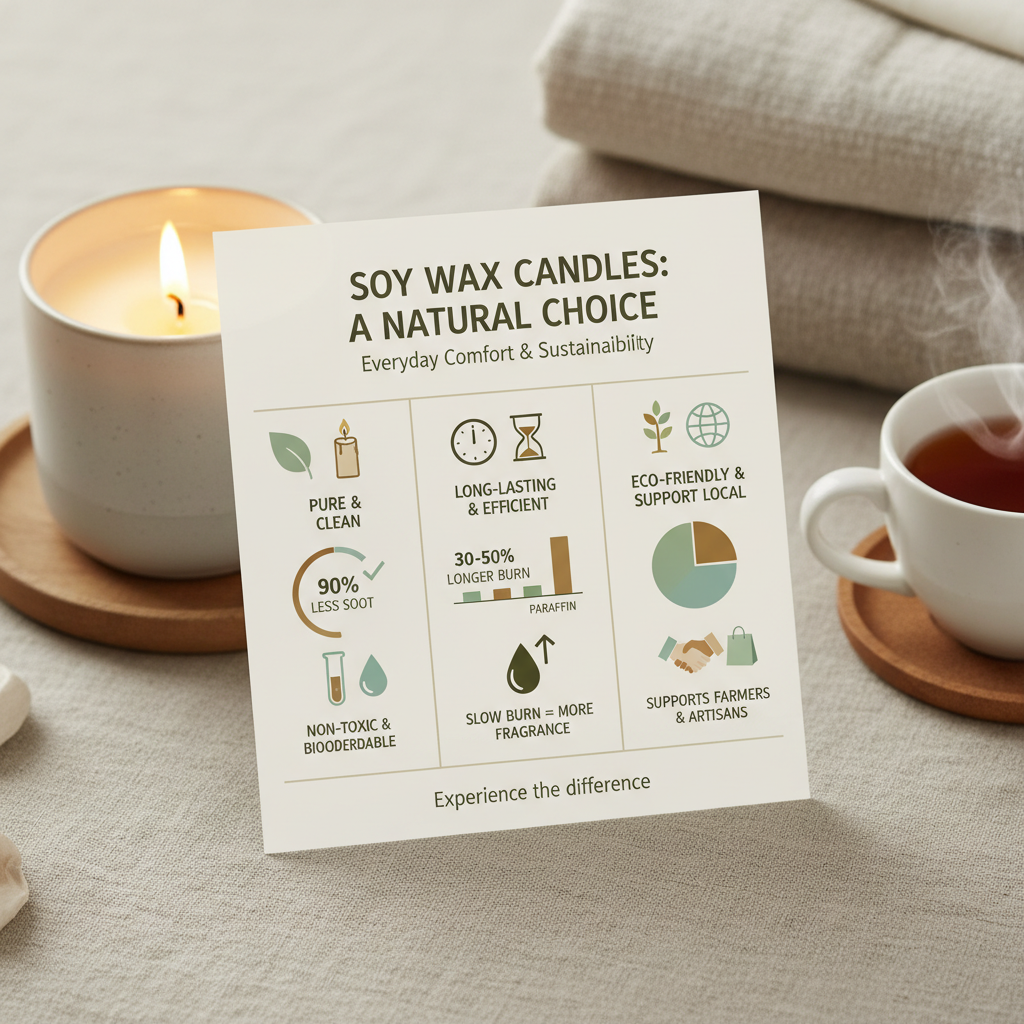
One of the defining characteristics of soy wax candles is their cleaner burn. Soy wax produces significantly less soot than paraffin wax, reducing indoor air pollution and making them a healthier choice, especially for individuals with sensitivities or respiratory issues. This cleaner burn also translates to less residue on jars and walls.
Another key factor is scent throw. While soy wax sometimes requires a slightly higher fragrance load than paraffin wax to achieve the same intensity, it holds fragrance oils remarkably well, resulting in a consistent and long-lasting aroma. The quality of the fragrance oil used is paramount in achieving a desirable scent throw.
Soy wax also has a lower melting point than paraffin wax, meaning soy wax candles generally burn slower and last longer. This translates to greater value for consumers and a more sustainable use of resources. The lower melting point also makes soy wax easier to work with for candle makers.
Performance Factors and Applications
The burn time of soy wax candles is significantly influenced by the diameter of the candle and the type of wick used. Wider candles require larger wicks to ensure a full melt pool, while smaller candles need smaller wicks to prevent excessive smoking. Experimentation with different wick sizes is crucial for optimal performance.
Beyond their use in standard jar candles, soy wax is versatile enough for a range of applications, including wax melts, tealights, pillars, and even massage candles. This versatility makes it attractive to candle makers offering a diverse product line.
Soy Wax Candle Performance Comparison
Global Applications and Market Presence
The North American market currently represents the largest segment for soy wax candles, driven by a strong consumer preference for natural and sustainable products. However, Europe is experiencing rapid growth, with increasing demand from eco-conscious consumers in countries like Germany, the United Kingdom, and France.
Asia-Pacific is an emerging market with significant potential. As disposable incomes rise and awareness of environmental issues increases in countries like China and Japan, the demand for soy wax candles is expected to grow substantially. Latin America is also showing promising growth, particularly in Brazil and Mexico.
Advantages and Long-Term Value Proposition
The cost of soy wax has historically been higher than paraffin wax, but this price gap is narrowing as production efficiency increases and demand rises. Moreover, the longer burn time of soy wax candles often offsets the initial price difference, providing consumers with greater value over the lifespan of the product.
From a sustainability perspective, soy wax candles represent a more responsible choice. They are biodegradable, renewable, and support American farmers, contributing to a more circular economy. These factors appeal to a growing segment of consumers who prioritize ethical and environmental considerations.
The emotional value associated with soy wax candles also contributes to their appeal. The cleaner burn and natural fragrances create a more relaxing and healthy ambiance, enhancing the overall aromatherapy experience. This focus on well-being further reinforces the value proposition.
Future Trends and Innovations in Soy Wax Candles
Innovations in soy wax formulations are focused on improving scent throw and burn pool consistency. Researchers are exploring additives and blending techniques to enhance the performance of soy wax and make it even more competitive with paraffin wax.
The integration of digital technologies, such as smart home devices and connected candles, is also emerging as a trend. This allows consumers to control candle settings remotely and create customized aromatherapy experiences.
Furthermore, the adoption of sustainable packaging materials and eco-friendly shipping practices is gaining momentum, aligning with the broader trend towards environmental responsibility. These innovations will further enhance the appeal of soy wax candles and drive market growth.
Summary of Soy Wax Candle Challenges and Potential Solutions
| Challenge |
Impact on Soy Wax Candles |
Potential Solution |
Implementation Cost (1-10) |
| Lower Scent Throw |
Reduced customer satisfaction |
Utilize higher fragrance load or fragrance oil boosters |
3 |
| Frosting |
Aesthetic imperfection |
Control pouring temperature and cooling rate |
2 |
| Higher Cost |
Price sensitivity among consumers |
Optimize sourcing and production efficiency |
6 |
| Wick Selection |
Uneven burning or excessive smoking |
Thorough wick testing for each fragrance and container |
5 |
| Supply Chain Reliability |
Potential disruptions to wax availability |
Diversify soybean oil suppliers |
4 |
| Consumer Education |
Lack of understanding about benefits |
Marketing campaigns highlighting sustainability and health benefits |
7 |
FAQS
The primary difference lies in their origins. Paraffin wax is a byproduct of petroleum refining, a non-renewable resource, while soy wax is derived from soybeans, a renewable vegetable source. Soy wax also burns cleaner, producing less soot and fewer potentially harmful chemicals than paraffin wax. This makes soy wax a more sustainable and healthier option, contributing to better indoor air quality. Ultimately, opting for soy wax candles is a conscious decision towards eco-friendliness.
Yes, soy wax candles generally have a lower environmental impact than paraffin wax candles. Soybeans are a renewable resource, and soy wax is biodegradable. Furthermore, the production of soy wax typically requires less energy than the refining of petroleum. While the transportation and processing of soybeans do have environmental consequences, the overall footprint is typically smaller than that of paraffin wax.
To maximize the burn time of your soy wax candle, trim the wick to about ¼ inch before each lighting. This prevents smoking and ensures a clean burn. Allow the wax to melt completely across the surface on the first burn, creating a full melt pool. Avoid burning the candle for more than 4 hours at a time to prevent overheating. Proper wick trimming and full melt pools are key to enjoying your candle for longer.
Frosting, the white crystalline coating sometimes seen on soy wax candles, is a natural characteristic of soy wax and does not affect the candle’s performance. It's caused by the wax cooling at different rates and is simply a cosmetic issue. It is more common in natural soy wax candles than those with many additives, and doesn't impact the fragrance throw or burn quality.
Soy wax itself is generally considered hypoallergenic. However, fragrance oils used in candles can contain allergens. If you have sensitivities, it’s essential to check the fragrance ingredient list before purchasing. Opting for unscented soy wax candles can minimize the risk of allergic reactions. Ensure the candle is made with pure soy wax and without any harmful additives.
The fragrance load refers to the percentage of fragrance oil added to the wax. Soy wax generally holds less fragrance oil than paraffin wax, typically around 6-10%. A lower fragrance load may result in a weaker scent throw, while a higher load can affect the candle's burn characteristics. Reputable candle makers carefully balance fragrance load to achieve optimal performance and a consistent, enjoyable scent experience.
Conclusion
In conclusion, soy wax candles represent a significant step towards sustainable and healthier living. Their renewable source, cleaner burn, and longer lifespan offer tangible benefits for consumers and the environment. The growing demand for soy wax candles reflects a broader shift in consumer values, prioritizing ethical sourcing, environmental responsibility, and personal well-being.
Looking ahead, continued innovation in soy wax formulations and the integration of smart technologies will further enhance the appeal of these candles. Supporting companies committed to sustainable practices, like Seawell Candle, and educating consumers about the benefits of soy wax will be crucial for driving continued growth and maximizing the positive impact of this remarkable product.