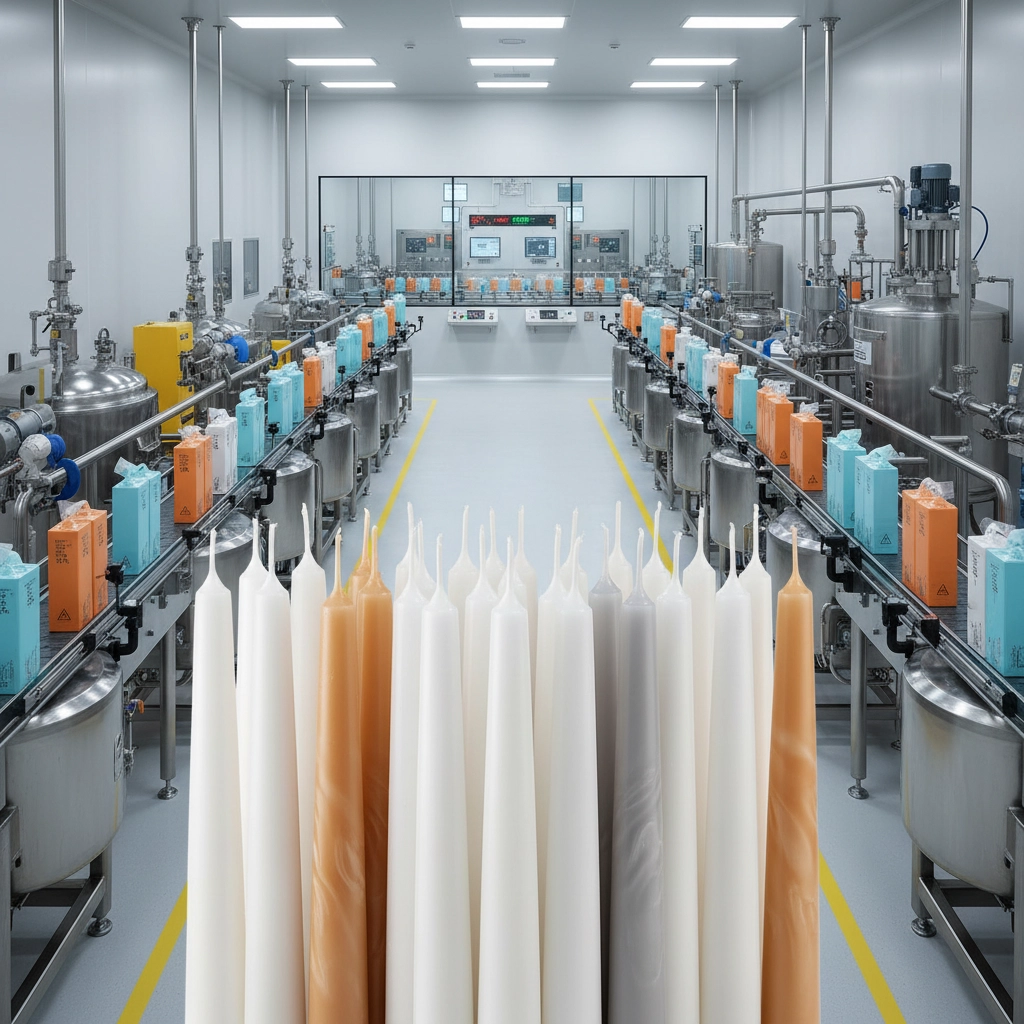
When sourcing high-end decorative lighting, the balance between aesthetic precision and manufacturing reliability often determines the success of a retail collection. For global importers, China taper candles have evolved from simple commodity items into sophisticated design elements that define dining atmospheres and event aesthetics.
The shift toward curated home decor has increased the demand for candles that offer both structural stability and a clean burn. Professionals are no longer looking for just a "stick candle" but are seeking specific color palettes, scent-free purity for dining environments, and certifications that ensure safety and social compliance in the supply chain.
Understanding the technical nuances of wax composition and the logistical capabilities of large-scale Chinese manufacturers allows buyers to optimize their inventory and ensure a consistent quality standard across thousands of units.

Defining the Standard for Modern Taper Candles

The modern taper candle is characterized by its slender, tapering silhouette, designed specifically to fit standard candle holders while providing a dramatic vertical element to a room. Unlike pillar candles, tapers are engineered for a steady, controlled melt rate that prevents excessive dripping, a critical requirement for high-end tableware.
In the context of Chinese manufacturing, the industry has transitioned toward highly specialized production lines. The distinction between paraffin-based and beeswax options allows for different market positioning—ranging from affordable daily necessities to luxury organic home accents.
For a procurement officer, the "standard" is no longer just about dimensions; it is about the consistency of the color across batches and the vertical alignment of the wick, ensuring that the candle burns straight without leaning.
Core Technical Attributes of Premium Tapered Wax
Technical excellence in taper candles begins with the wax blend. Premium options often utilize a curated mix of paraffin or beeswax to achieve a hard enough structure to resist bending during shipping, yet flexible enough to avoid cracking during temperature fluctuations.
Unscented profiles are particularly vital for dining table applications. By removing fragrances, manufacturers ensure that the candles do not clash with food aromas or perfumes, making them a versatile choice for hospitality sectors and home kitchens.
Furthermore, the integration of high-quality wicks is essential. A wick that is too thick causes the candle to "tunnel" or burn too quickly, while one that is too thin leads to frequent flickering and extinguishing.
Diversified Application Scenarios in Interior Design
Taper candles serve as architectural accents in various decor styles. In modern minimalism, a set of muted pink or sage green tapers provides a pop of color without overwhelming the space. In rustic or farmhouse settings, terracotta and cream tones enhance the warmth of natural wood textures.
Beyond the dining table, these candles are increasingly used in clustered arrangements within large vases or sophisticated candelabras to create dynamic height levels. This vertical interest is a key tool for interior designers aiming to draw the eye upward in a room.
Commercial applications, such as boutique hotels and wedding venues, rely on the 4-pack curated collections. This allows for immediate color-blocking or tonal arrangements that can be quickly swapped to match seasonal themes or event branding.
Evaluating Burn Performance and Material Efficiency
Measuring the efficiency of a candle requires looking at the burn rate per hour and the amount of residue left behind. High-density wax formulations ensure that the candle maintains its structural integrity even as it nears the base.
When comparing generic production to professional-grade manufacturing, the difference lies in the stability of the flame and the reduction of soot production. This is often a result of stricter raw material screening and precise wick centering.
China taper candles Performance Metrics
The data suggests that specialized manufacturing processes significantly improve burn duration and reduce drip frequency, providing a more luxurious user experience and higher perceived value for the end consumer.
Strategic Procurement and Quality Control Frameworks
For large-scale buyers, the ability to scale production without losing quality is the primary challenge. This requires a manufacturer with a robust infrastructure, including extensive workshop space and a skilled workforce capable of handling high-volume outputs.
Efficient turnaround times—such as completing over 90% of orders within twenty days—are critical for retailers who need to respond to rapid seasonal shifts in the home decor market. This efficiency is only possible through streamlined logistics and professional factory management.
Quality control should focus on three pillars: material purity (verified by CE/ROHS), dimensional accuracy (ensuring a perfect fit in holders), and packaging security (preventing breakage during long-haul sea freight).
Emerging Trends in Sustainable Candle Manufacturing
The industry is likely to see a continued shift toward natural wax alternatives. Beeswax and soy-blend tapers are becoming more prevalent as consumers move away from purely paraffin-based products in favor of biodegradable and non-toxic options.
Customization is also evolving. Instead of standard primary colors, there is a growing trend toward "muted" and "dusty" palettes—such as terracotta, sage green, and dusty blue—which align with the boho and farmhouse interior design movements.
Automation in the molding process is expected to further reduce the margin of error in candle diameter and height, allowing for even more precise fitment in high-end luxury candelabras.
Comparative Selection Guide for Global Importers
Choosing the right taper candle depends on the target market segment. A luxury boutique will prioritize material purity and curated color sets, while a large-scale household goods retailer will focus on unit cost and delivery speed.
The following comparison evaluates different product categories based on their suitability for specific commercial needs and user environments.
| Product Category | Primary Material | Best Use Case | Key Decision Factor |
|---|---|---|---|
| Paraffin Tapered | Refined Paraffin | Mass Market Retail | Cost-per-unit Efficiency |
| Beeswax Tapered | Pure Beeswax | Eco-Luxury Boutiques | Material Certification |
| Colored Stick | Dyed Paraffin/Soy | Seasonal Event Decor | Color Palette Precision |
| Scented Taper | Fragrance-infused Wax | Spa & Wellness | Scent Throw Strength |
| White Stick | Bleached Paraffin | Daily Household Use | Burn Duration Stability |
| Pillar Hybrid | High-Density Wax | Centerpiece Displays | Structural Rigidity |
By aligning the product type with the specific end-use scenario, importers can maximize their ROI and reduce the risk of inventory stagnation.
Frequently Asked Questions
Conclusion
The sourcing of high-quality taper candles requires a strategic approach that blends aesthetic selection with technical scrutiny. From wax composition to certification compliance, every detail contributes to the final user experience and the commercial viability of the product line.
For professionals seeking a reliable manufacturing partner capable of delivering consistency, scale, and design precision, the resources available through www.seawellcandle.com provide a comprehensive look at how professional candle production meets global market demands.